

Satisfied in Jesus, The Freedom of “You Don’t Own Me” (Philippians 4)

I’ve spent over fifty years in ministry. I’ve received support from churches and individuals. I’ve seen how money can complicate relationships. And I’ve watched good people get tangled up in the gift-debt cycle without even realizing it.
Paul understood something profound about satisfaction and freedom. He wrote about it from a Roman prison. And what he said in Philippians 4 can completely change how you think about giving, receiving, and finding contentment in Christ.
The Roman Patronage System: When Gifts Came With Strings
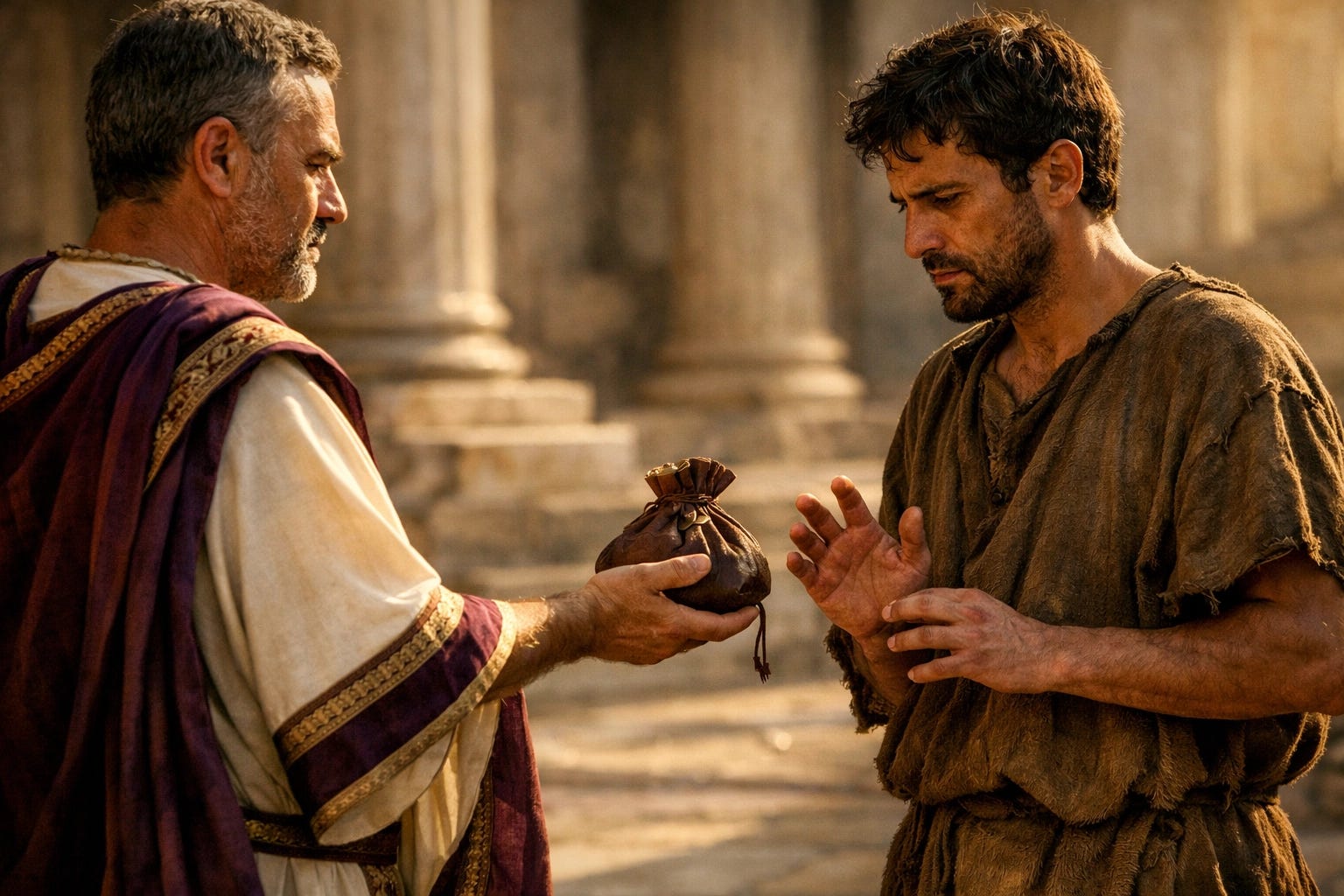
Let me explain something that most people miss when they read Philippians 4. Paul wasn’t just writing a thank-you note. He was navigating a cultural minefield.
In the Roman world, the patronage system controlled everything. Rich patrons gave gifts to their clients. Those clients owed loyalty, favors, and public praise in return. It was expected. It was required. And it came with invisible chains.
When someone gave you money, they owned a piece of you. You were expected to promote them, defend them, and align yourself with their interests. The gift created a debt that could never fully be repaid.
Paul received financial support from the Philippian church. But he refused to let that support come with strings attached. He wasn’t their employee. He wasn’t their client. He was Christ’s servant. And that made all the difference.
Paul’s Radical Shift: “I Have Learned to Be Content”
Philippians 4:11-13 Not that I speak in respect of want: for I have learned, in whatsoever state I am, therewith to be content. I know both how to be abased, and I know how to abound: every where and in all things I am instructed both to be full and to be hungry, both to abound and to suffer need. I can do all things through Christ which strengtheneth me.
Notice the word “learned.” Paul didn’t start out content. He had to learn it. This wasn’t his natural state. And I love that honesty.
I’ve had to learn it too. I’ve wanted bigger churches. More salary. Greater recognition. I’ve kicked against what God was doing in my life. I’ve grumbled about His blessings. And I’ve had to come back to this truth over and over: contentment isn’t about circumstances. It’s about Christ.
Paul said he could handle being poor. He could handle being rich. Why? Because Christ strengthened him. His satisfaction wasn’t tied to his bank account or his supporters’ approval. His satisfaction was tied to Jesus.
That’s freedom.
“You Don’t Own Me”: The Freedom of Christ-Centered Giving

Here’s where Paul gets really bold. Look at what he says next:
Philippians 4:14-17 Notwithstanding ye have well done, that ye did communicate with my affliction. Now ye Philippians know also, that in the beginning of the gospel, when I departed from Macedonia, no church communicated with me as concerning giving and receiving, but ye only. For even in Thessalonica ye sent once and again unto my necessity. Not because I desire a gift: but I desire fruit that may abound to your account.
Did you catch that? Paul thanked them for their gift. But then he immediately clarified: “I’m not writing because I need more money. I’m writing because your giving is building treasure in your account with God.”
He flipped the script. In the Roman system, the giver held power over the receiver. But Paul said, “Your gift doesn’t obligate me to you. Your gift obligates God to reward you.”
That’s a revolutionary statement. Paul was essentially saying, “You don’t own me. Christ does. And when you give to His work, you’re not buying influence over me. You’re investing in your own spiritual account.”
This is the freedom of Christ-centered giving. When your satisfaction is in Jesus, you can give without needing control. You can receive without owing your soul. The human strings are cut. The patronage system is broken.
The Secret Paul Discovered (And We Need Too)
Philippians 4:18-19 But I have all, and abound: I am full, having received of Epaphroditus the things which were sent from you, an odour of a sweet smell, a sacrifice acceptable, wellpleasing to God. But my God shall supply all your need according to his riches in glory by Christ Jesus.
Here’s Paul’s secret: God is the ultimate supplier. Not people. Not patrons. Not churches. God.
When you understand that truth, everything changes. You stop looking to people for security. You stop worrying about who might withdraw support. You stop being owned by fear or obligation.
I’ve had churches that have generously supported me. And I’ve had lean seasons where the bank account looked grim. But in both situations, God was faithful. He supplied what I needed. Not always what I wanted. But always what I needed.
That’s the contentment Paul is talking about. It’s not about having enough money. It’s about trusting the One who provides the money.
When you’re satisfied in Jesus, you’re free. Free from the gift-debt cycle. Free from performance anxiety. Free from the need to please everyone who writes a check. You can serve with integrity because you’re not owned by anyone except Christ.
As I’ve written before, believing God loves you exactly as you are is the foundation for everything else. When you know you’re loved unconditionally, you stop scrambling for approval. You stop selling pieces of yourself to the highest bidder. You rest in His provision.
Practical Applications for Leaders and Churches

Let me get practical. How does this truth work itself out in real ministry?
For pastors and ministry leaders: Stop letting donors dictate your direction. I know that sounds harsh. But if a wealthy family in your church is pulling your strings because they write big checks, you’re not free. You’re in the patronage system. And God can’t fully use you.
Pray for God’s provision. Thank your supporters sincerely. But never, ever let money determine your obedience to God’s call.
For churches: Give generously to your pastors and missionaries. But give without strings. Don’t use your financial support as leverage to control decisions or demand personal access. Your gift should be an act of worship to God, not a transaction that buys influence.
For missionaries: Learn to live with open hands. Receive support gratefully. But don’t let fear of losing support silence your voice or compromise your message. God called you. God will sustain you. People are just the channel He uses.
For all of us: Practice contentment daily. When you start comparing yourself to others, stop. When you start worrying about finances, pray. When you start feeling owned by someone’s expectations, remember: You belong to Christ alone.
The offering you give makes a difference. The prayers you pray matter. The work you do has eternal value. Not because you’re performing for approval. But because God takes what you offer and multiplies it for His glory.
The Peace That Guards Your Heart
Philippians 4:6-7 Be careful for nothing; but in every thing by prayer and supplication with thanksgiving let your requests be made known unto God. And the peace of God, which passeth all understanding, shall keep your hearts and minds through Christ Jesus.
Paul connected contentment with peace. When you stop being anxious about provision, when you stop being owned by people’s expectations, God’s peace guards your heart like a military sentinel.
That peace isn’t based on your bank balance. It’s based on His faithfulness.
I’ve seen that peace in ministry leaders who lost their churches but kept their integrity. I’ve seen it in missionaries who came home broke but spiritually rich. I’ve seen it in ordinary believers who gave sacrificially and watched God provide in unexpected ways.
That’s the freedom of being satisfied in Jesus. You don’t own me. They don’t own me. Christ owns me. And He takes care of what belongs to Him.
FAQ: Common Questions About Biblical Contentment
Q: Does being content mean I shouldn’t work for promotions or better opportunities?
No. Biblical contentment means you’re satisfied with God’s provision in your current season while working diligently toward future goals. It’s not laziness or passivity. It’s trusting God’s timing while doing your part faithfully.
Q: How do I break free from the gift-debt cycle in my church or ministry?
Start by clearly communicating that gifts are given to God’s work, not to buy influence. Thank donors sincerely, but set boundaries around decision-making. Make sure your board or leadership team makes decisions based on biblical conviction, not donor pressure. And pray consistently for God’s provision so you’re not dependent on any single source.
Q: What if I’m struggling with discontentment right now?
Be honest with God about it. Paul said he had to learn contentment: it wasn’t natural. Start by thanking God daily for what you do have. Then ask Him to show you where your satisfaction is coming from. Is it from Him? Or is it tied to circumstances, people, or possessions? Let Christ be your sufficiency, and watch how your perspective shifts.
Want to go deeper into finding freedom from performance and resting in God’s unconditional love? Check out more articles on my blog, or listen to the Followed by Mercy podcast, where we explore grace-centered living for pastors and ministry leaders.
#Contentment #Philippians4 #BiblicalFreedom #MinistryLeadership #SatisfiedInJesus